What A Double Tapped Circuit Breaker Really Means in your Ventura County Home Inspection Report
A double-tapped circuit breaker — two wires connected to a single breaker slot — is one of the most common electrical deficiencies I find during home inspections in Simi Valley and across Ventura County. It’s not an emergency, but it is a code violation that needs to be corrected. Here’s what it is, why it matters, and what you should do about it.
What Is a Double-Tapped Circuit Breaker?
Inside your electrical panel, every circuit in your home is supposed to have its own dedicated connection to a circuit breaker. That breaker is the safety device — it detects when too much current is flowing and trips to cut power before something overheats or catches fire.
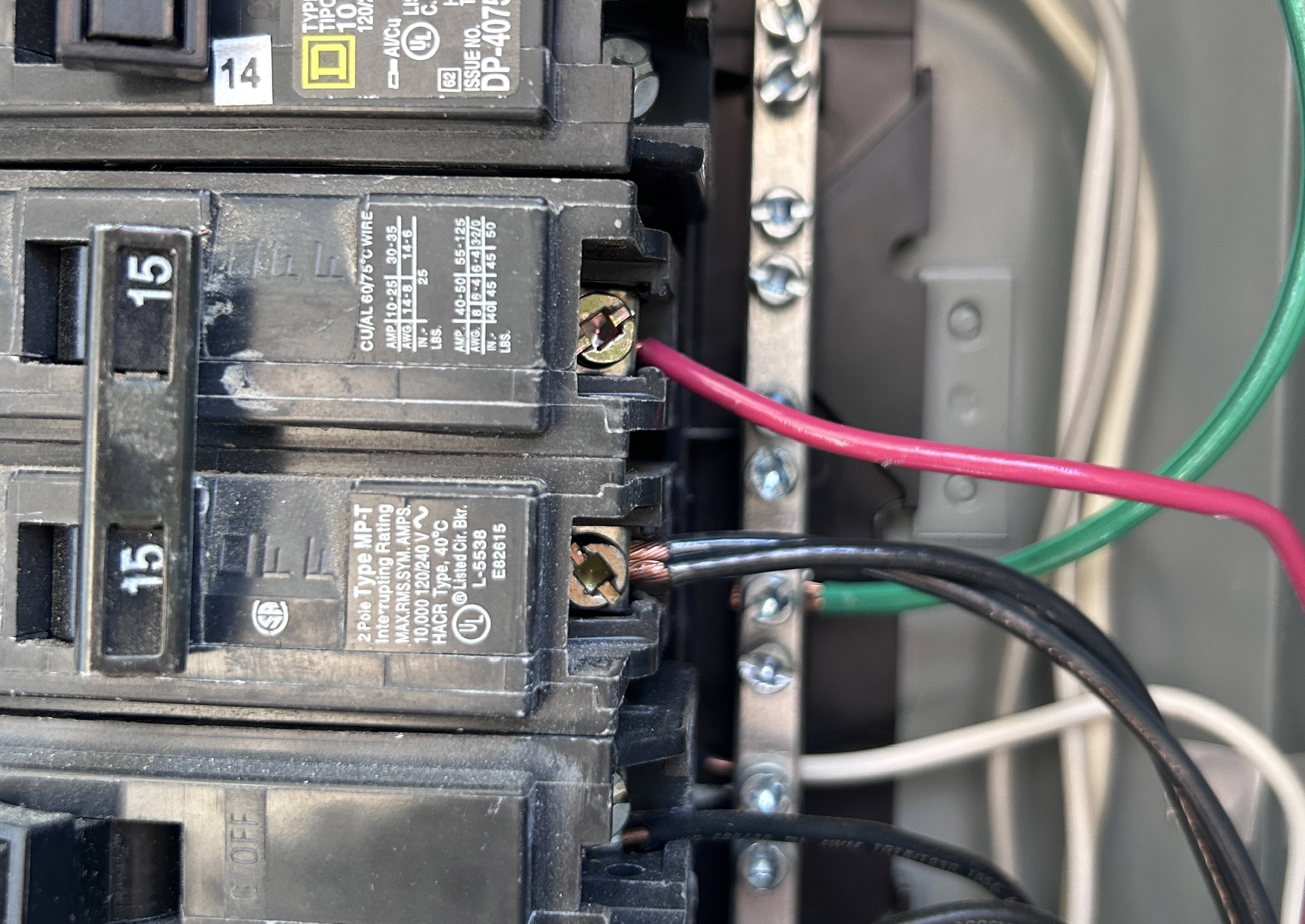
A double-tapped breaker — sometimes called a “double-lugged” breaker — is when two separate wires are connected to a single breaker terminal that’s only designed to handle one. As a licensed electrician, I can tell you this is a shortcut that was often taken when someone added circuits to a panel without adding breakers. The space ran out, so they just doubled up.
Most standard residential breakers are designed and rated for one wire only. When two wires share that connection, you get a loose connection point, inconsistent contact, and a circuit that may not trip the way it’s supposed to when it counts.
Why It Matters — and Why You Shouldn’t Ignore It
Here’s what that actually means in practical terms. A loose or poorly seated wire in a breaker terminal is a heat source. Electricity moving through a bad connection generates heat. Over time, that heat can damage wire insulation, cause arcing, and in the worst cases, start a fire inside the wall or panel — often without any warning.
I always tell buyers: just like in flying, little problems in a home can turn into big ones. A double-tapped breaker isn’t going to cause a fire tomorrow morning, but it’s the kind of issue that quietly gets worse over years. The circuit protection you’re counting on may not perform correctly — meaning if there’s an overload on one of those two circuits, the breaker might not trip as quickly as it should, or the wrong circuit could be affected.
There’s also a code and liability angle. This is a violation of the National Electrical Code (NEC) in most configurations — and that matters for insurance purposes, home sales, and future inspections. Real estate agents: if this shows up on an inspection report, it’s something buyers will ask about, and addressing it upfront avoids last-minute renegotiations.
What To Do About a Double-Tapped Breaker
The good news is this is a fixable problem — usually without replacing your panel. A licensed electrician has a few clean options:
Add a new breaker: If there’s an open slot in the panel, the second wire simply gets its own dedicated breaker. This is the cleanest solution and the most straightforward fix.
Install a tandem (slimline) breaker: These are double breakers that fit into a single slot — two breakers in one space. Many panels support them, which means you can add capacity without replacing the panel.
Sub-panel addition: If the main panel is genuinely full, a small sub-panel may be the right answer. It’s a bigger job but it’s done right.
One important note: some breakers are specifically rated for two conductors — look for markings on the breaker itself or check the panel’s labeling. A handful of breakers are UL-listed for two wires. If that’s the case, it’s not technically a deficiency. But this is the exception, not the rule, and it takes an experienced eye to verify.
In the homes I inspect in Simi Valley and throughout Ventura County, I document every instance of double-tapping clearly in my report with photos. My recommendation is always to have a licensed electrician evaluate the panel and make the appropriate correction — not a handyman, not a DIY fix. Electrical panels are not the place to cut corners.